
You are about to swap tokens before a deadline, but the wallet estimates a fee that seems larger than the trade itself. Then another warning appears: the transaction may fail, the network is busy, or the token approval could expose more funds than expected. This is the point at which installing a browser wallet is no longer a simple software decision. It becomes a question of how clearly the wallet explains transaction mechanics.
Rabby is designed for users who interact with decentralized applications across multiple blockchain networks. Its value is not that it can make blockchains free or guarantee a cheaper transaction. The more useful mental model is different: a wallet can improve the quality of a transaction decision by showing what a decentralized application is asking the network to do, estimating likely costs, and highlighting risks before the user signs.
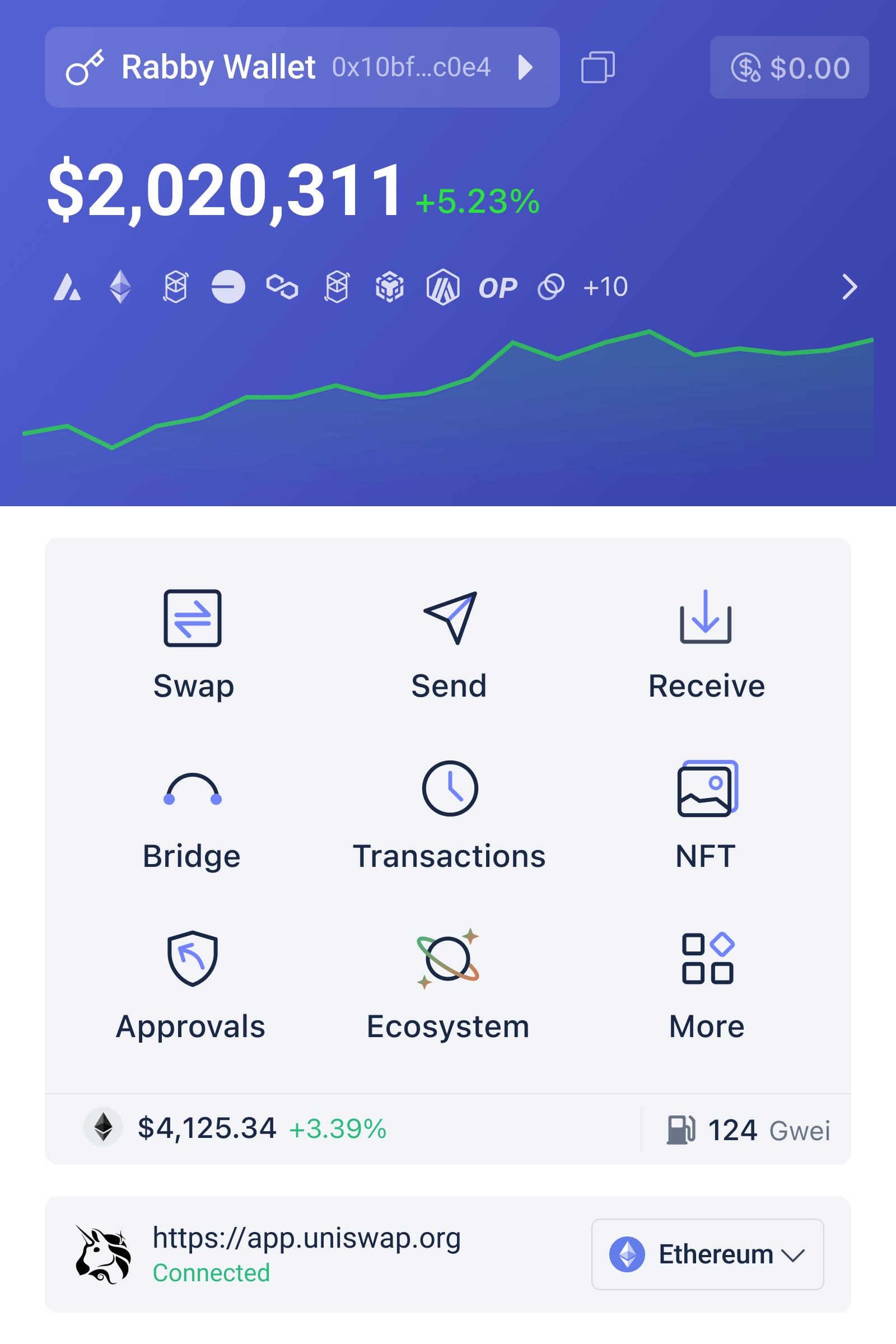
What a Rabby extension download actually changes
A browser wallet extension is the connection layer between a user, a decentralized application, and a blockchain. When a DeFi site requests a transaction, the extension receives the request and presents signing information. The wallet does not replace the blockchain’s fee market, and it does not control whether miners or validators include a transaction. Instead, it helps translate technical instructions into a decision a person can review.
For US users, the installation step deserves more attention than it often receives. Search results can contain imitations, sponsored pages, or download instructions that redirect through unfamiliar domains. Use a trusted route to the wallet’s official distribution channel, verify the publisher and browser permissions, and inspect the extension before importing or creating an account. A useful starting point for readers researching the rabby extension download is to treat installation as a security procedure, not merely a click-through task.
During setup, a new wallet can generate a recovery phrase, while an existing wallet may be imported through a recovery phrase or another supported method. The recovery phrase is the controlling credential for the wallet. A browser extension cannot make a phrase safe if the user stores it in screenshots, cloud notes, email, or a website form. No legitimate support process should require a private key or recovery phrase. This boundary is fundamental: wallet software can improve transaction visibility, but custody discipline remains the user’s responsibility.
After installation, check the extension’s permissions, pin it to the browser toolbar, and confirm that the account address shown by the wallet matches the address you intend to use. Before connecting to a DeFi application, verify the site’s domain and consider using a separate account for experimental applications. A wallet that displays a warning is useful only if the user pauses long enough to understand what the warning means.
Gas optimization begins with the right definition
“Gas” is the computational resource consumed by a transaction on an Ethereum-compatible network. The total fee is generally determined by how much computation the transaction uses and the price paid per unit of that computation. A simple transfer usually consumes less gas than a multi-step decentralized exchange transaction, a liquidity action, or a contract interaction that updates several records.
The important distinction is between gas usage and gas price. A user can sometimes reduce the amount of computation by choosing a simpler action, avoiding unnecessary approvals, or using a more efficient route. At other times, the transaction itself is fixed, but the price per unit is temporarily high because demand is strong. Lowering the fee setting in that situation may reduce the chance of timely inclusion rather than improve the underlying economics.
On networks that use a base fee and a priority fee, the base fee reflects network conditions while the priority fee acts as an incentive for inclusion. A wallet may also request a maximum fee, which limits what the user is willing to pay under the transaction’s rules. These fields can look confusing, but the practical lesson is straightforward: the fee estimate is a market-sensitive proposal, not a permanent price tag. Rabby’s interface can help users review those parameters, but the network determines the final environment.
There is another common misconception: a wallet cannot always “optimize gas” by finding a magic setting. If a smart contract requires a particular sequence of operations, the wallet cannot safely remove those operations. A transaction that appears expensive may be expensive because it is doing more work. The real optimization may involve changing the timing, route, network, or application workflow rather than merely dragging a fee slider downward.
Four practical levers for lower transaction costs
Choose the network deliberately. Many DeFi applications operate across a primary network and one or more scaling networks. Fees, liquidity, application support, bridge costs, and transaction speed can differ substantially. A cheaper network is not automatically the better choice if the required asset is unavailable, liquidity is thin, or moving funds there requires an additional bridge transaction. Compare the full path, not just the visible swap fee.
Reduce avoidable transactions. Token approvals, permit signatures, deposits, swaps, withdrawals, and claims may each create separate steps. Some applications offer a more efficient approval method or combine actions, but users should not assume that every signature is free simply because it is described as a signature. Read whether the action is an off-chain authorization or an on-chain transaction. Avoid granting unlimited spending permission when a narrower allowance is practical, especially for unfamiliar contracts.
Time discretionary activity. When an action is not urgent, checking the estimate at a less congested period may help. This is not a guaranteed strategy because network activity can change quickly, and a lower fee setting can lead to delays or replacement transactions. A user should decide whether the priority is minimum cost, predictable confirmation, or execution before a market move. Those goals can conflict.
Prevent failed transactions. A failed transaction can still consume gas because the network had to execute the contract code before determining that the requested state change could not complete. Wallet simulations and warnings may identify some problems, such as insufficient balance, a likely revert, or suspicious contract behavior. They are valuable filters, not infallible guarantees. Market conditions can change between simulation and inclusion, and a malicious or poorly designed contract may not be fully understood from a warning alone.
Why a lower gas fee can produce a worse outcome
Gas optimization is often confused with minimizing the number displayed in the confirmation window. That is too narrow. The economically relevant cost includes the fee, the probability of failure, the value lost through delay, and the risk of executing an unintended action. A transaction that saves a small amount of gas but misses a liquidation window or suffers from changing slippage may be more expensive in practical terms.
Slippage is also different from gas. Gas pays for blockchain computation; slippage is the difference between the expected exchange rate and the rate actually received. A user can approve a low-fee swap and still receive a poor execution price if liquidity moves. Conversely, a higher gas fee may be rational if it helps a time-sensitive trade reach the network sooner, although faster inclusion never guarantees a favorable market price.
Rabby’s transaction review is therefore best used as a checklist. Confirm the network, the account, the destination contract, the asset being spent, the expected output, the token approval amount, and the fee settings. If the request is difficult to explain in plain language, do not sign immediately. The ability to see more information is only useful when it changes behavior.
Security boundaries that gas tools cannot solve
Transaction simulation can expose a mismatch between a user’s intention and a contract request, but it cannot eliminate all smart-contract risk. A contract may be upgradeable, an oracle may report an unexpected price, a bridge may have separate operational risks, or an application’s front end may be compromised. Wallet warnings should be treated as evidence for investigation rather than as a complete security certification.
Users should be especially cautious with urgent prompts, “support” messages, airdrop claims, and websites requesting broad token approvals. Hardware wallets can add protection for key storage, but they do not make a malicious transaction harmless. A hardware device may securely sign exactly the transaction the user approves. Security depends on both key protection and transaction comprehension.
There is a similar boundary around network switching. A multi-chain wallet can make several networks accessible from one interface, but assets on one network are not automatically usable on another. A token with the same ticker may represent different contracts on different chains. Before bridging or swapping, verify the network, contract identity, destination, and whether the receiving application supports that asset.
A reusable framework before signing
For routine DeFi activity, use a four-part review: identity, intent, economics, and reversibility. Identity asks whether the account, network, application domain, and contract are the ones you expect. Intent asks what the transaction changes: a transfer, approval, swap, deposit, borrow, or permission. Economics asks whether the fee, slippage, liquidity, and timing make sense. Reversibility asks what happens if the transaction is wrong, because confirmed blockchain transactions generally cannot be undone by customer support.
This framework is more durable than memorizing one wallet setting. It works during quiet markets and volatile ones, on a main network or a scaling network, and whether a user is making a small test transaction or managing a larger portfolio. For a new application, start with a small amount, inspect the first approval carefully, and review allowances later if the application is no longer needed.
No recent project-specific news has been provided for the current eligible week, so there is no responsible basis for claiming a newly released Rabby feature or a current performance improvement. The forward-looking question is instead how wallet interfaces will handle increasingly complex transactions. If applications continue combining swaps, lending, bridging, and permissions in one workflow, users will need clearer explanations of bundled actions and more reliable simulation. If those explanations remain opaque, convenience may increase faster than informed consent.
Rabby Wallet FAQ
Can Rabby guarantee the lowest gas fee?
No. A wallet can estimate network conditions and expose fee choices, but it cannot control demand, validator inclusion, contract complexity, liquidity, or market movement. The lowest displayed fee may also create delay or failure risk. Choose a fee according to the transaction’s urgency and the cost of waiting.
Does a browser extension protect me from every DeFi scam?
No. Transaction warnings and simulations can improve visibility, but they cannot replace checking domains, contracts, approvals, network details, and the purpose of each signature. Keep recovery phrases offline, use separate accounts when appropriate, and treat unexpected requests as untrusted until independently verified.
What is the safest way to test a newly installed wallet?
Confirm the receiving address, send a small test amount, and verify that the wallet and network display the same account. Then connect only to a DeFi application whose domain you have checked. Review every approval and transaction before signing; a successful test transfer does not validate an entire application.
The practical lesson is simple but easy to miss: gas optimization is not the same as paying the smallest possible fee. It is the process of choosing a transaction whose cost, timing, permissions, and execution risk fit the user’s objective. A well-used Rabby wallet can make that reasoning more visible. It cannot make the decision for you, and that limitation is precisely why careful review remains part of the tool.